
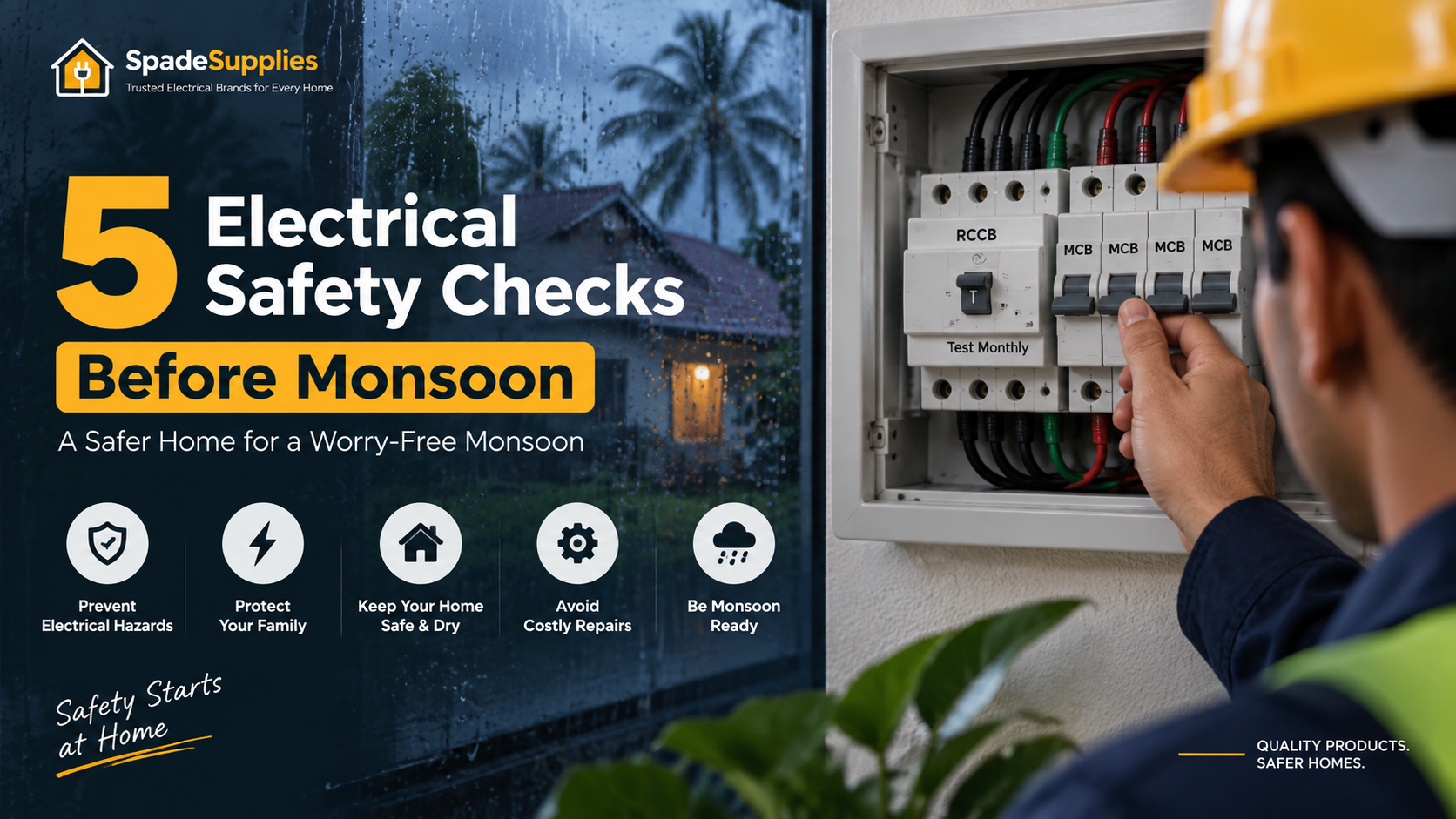

Monsoon brings much-needed rain and cooler weather, but it can also increase the risk of electrical problems at home.
Water, moisture, damaged wiring, overloaded sockets, and faulty electrical appliances can create dangerous situations if they are not checked in time.
Before the rainy season arrives, homeowners should take a few simple precautions to make their electrical systems safer.
Here are 5 important electrical safety checks before monsoon that every homeowner should consider.
1. Check Your MCB and Electrical Distribution Board
The MCB is one of the important safety components in a home’s electrical system.
It is designed to protect circuits from problems such as overloads and short circuits.
Before monsoon, inspect your electrical distribution board and check for:
- Loose connections
- Burn marks
- Unusual smell
- Damaged components
- Excessive heating
- Frequently tripping MCBs
If an MCB is repeatedly tripping, do not simply keep switching it back on.
Frequent tripping can indicate an underlying electrical problem that should be inspected by a qualified electrician.
Keeping the distribution board clean, dry, and properly enclosed is also important.
2. Make Sure Your RCCB Is Working Properly
An RCCB provides protection against electric shock caused by leakage current.
This makes it particularly important in areas where electrical equipment may come into contact with moisture.
Many RCCBs have a test button that can be used to check whether the protection mechanism is functioning.
If you are unsure how to test your RCCB safely, ask a qualified electrician to inspect it.
Never ignore an RCCB that does not operate correctly.
A properly maintained protection device can provide an additional layer of safety for your home.
3. Inspect Old or Damaged Electrical Wiring
Damaged wiring can become a serious concern when moisture enters the system.
Look for visible signs such as:
- Cracked insulation
- Exposed wires
- Loose connections
- Discoloured switches
- Burn marks
- Sparking
- Flickering lights
- Unusual buzzing sounds
Pay particular attention to wiring near balconies, bathrooms, kitchens, outdoor areas, and other places where moisture may be present.
Do not try to repair exposed electrical wires yourself.
Turn off the relevant circuit and have the issue checked by a qualified professional.
4. Check Switches, Sockets and Extension Boards
Electrical sockets are often overlooked during routine home maintenance.
Before monsoon, check whether your switches and sockets show signs of damage or overheating.
Avoid using:
- Cracked sockets
- Loose plugs
- Damaged extension boards
- Frayed appliance cables
- Wet electrical equipment
Never handle electrical switches, plugs, or appliances with wet hands.
If water has entered an electrical socket or appliance, avoid touching it until the power has been safely isolated and the equipment has been inspected.
5. Inspect Outdoor Electrical Connections
Outdoor electrical points require extra attention during rainy weather.
If your home has outdoor lights, pumps, garden equipment, gates, CCTV systems, or other electrical installations, check whether their connections are properly protected from rain and moisture.
Outdoor electrical equipment should be suitable for outdoor use and installed with appropriate protection.
Also check whether cables are properly secured and whether water can collect around electrical connections.
A small inspection before the monsoon can help identify problems before they become bigger ones.
What Should You Do If an Electrical Problem Occurs?
If you notice smoke, sparks, burning smells, repeated circuit trips, or exposed wires, treat the situation seriously.
If it is safe to do so, switch off the affected electrical supply and keep people away from the area.
Do not touch electrical equipment that may be wet or energized.
For electrical repairs, contact a qualified electrician rather than attempting a risky DIY repair.
A Quick Monsoon Electrical Safety Checklist
Before the rainy season, check:
☐ MCB and distribution board
☐ RCCB operation
☐ Old or damaged wiring
☐ Switches and sockets
☐ Extension boards and appliance cables
☐ Outdoor electrical connections
☐ Electrical equipment near water
☐ Signs of overheating or burning
☐ Loose connections
☐ Frequently tripping circuits
Final Thoughts
Monsoon electrical safety starts with prevention.
A few simple checks can help homeowners identify damaged wiring, faulty protection devices, unsafe sockets, and moisture-related electrical risks before they become serious problems.
Your home’s electrical system should be checked regularly, especially when you notice unusual signs such as repeated MCB trips, sparks, burning smells, or flickering lights.
For electrical products such as MCBs, RCCBs, switches, fans, geysers, and other home electrical solutions, choosing reliable products and getting them installed correctly is equally important.
Stay safe, keep electrical connections dry, and get electrical issues checked by a qualified professional.

About Author Spade Supplies
Leave a Reply Cancel reply
You must be logged in to post a comment.