
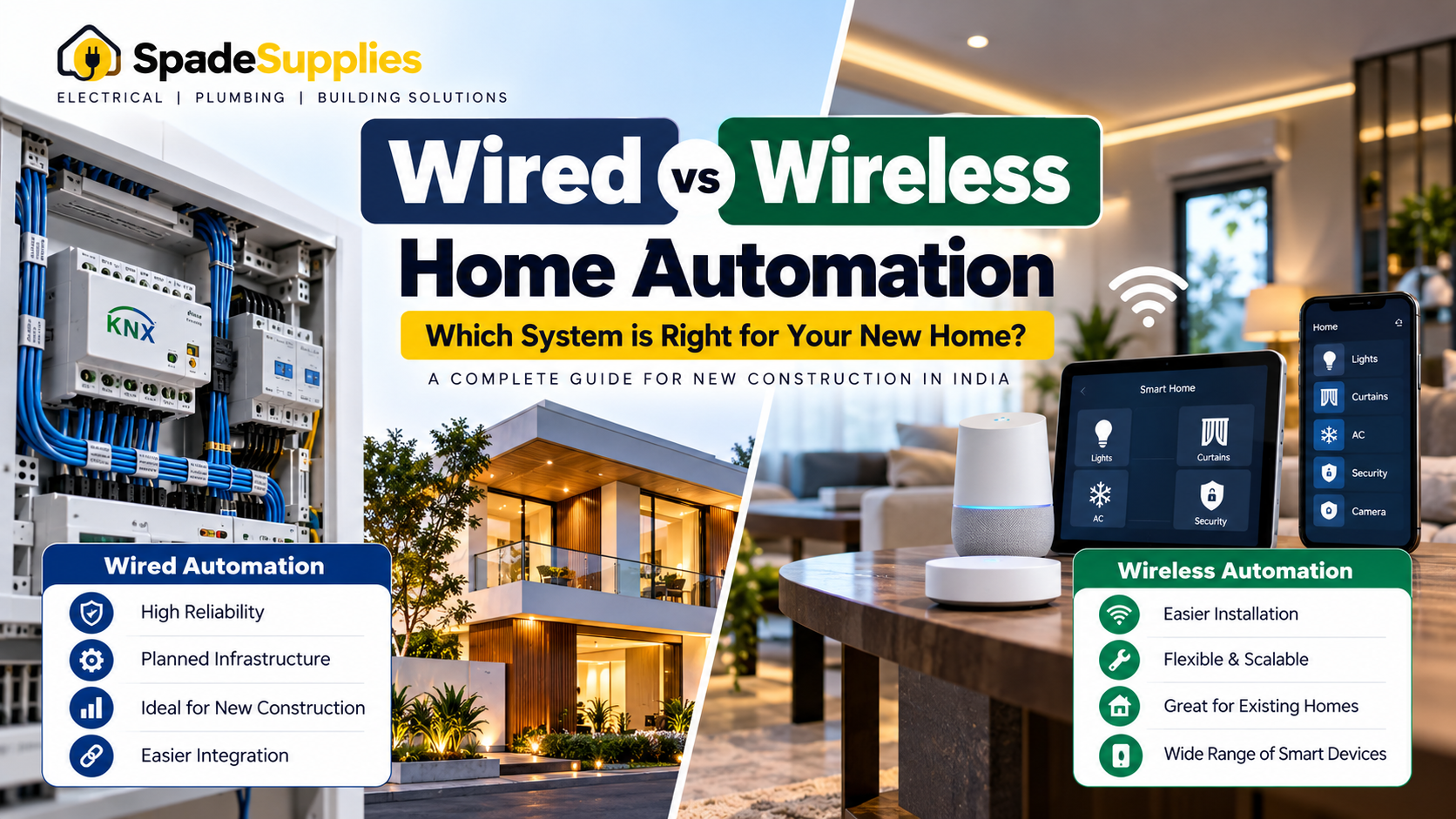

Wired vs Wireless: Choosing the Best Home Automation System in India for New Construction
Home automation is becoming an important part of modern residential construction.
Smart lighting, automated curtains, climate control, security systems and energy management can all be connected to create a more convenient home.
However, there is an important decision to make before installation:
Should you choose wired or wireless home automation?
For a new home, this decision should be made during the planning stage. Adding automation infrastructure early can reduce the need for expensive changes later. KNX also recommends discussing smart-home infrastructure during the construction phase of a new home.
In this guide, we compare wired and wireless systems and explain what Indian homeowners should consider before choosing one.
What Is Home Automation?
Home automation connects different systems in a property so they can be controlled automatically or from a central interface.
Depending on the system, you can automate:
- Lights
- Fans
- Air conditioning
- Curtains and blinds
- Security systems
- Door locks
- Sensors
- Entertainment systems
- Energy management
For example, a “Good Night” scene could turn off selected lights, close curtains and adjust the air conditioning with one command.
The exact features depend on the products and automation platform selected.
What Is Wired Home Automation?
A wired home automation system uses physical communication wiring to connect devices and controllers.
One example is KNX, an internationally recognised building automation standard. Wired KNX installations can connect lighting, blinds, heating, sensors and other building functions through a common automation system.
Because the wiring is planned during construction, the system can be integrated into the building from the beginning.
Benefits of Wired Automation
Wired systems can offer several advantages:
- Consistent communication
- Dedicated infrastructure
- Good scalability
- Less dependence on wireless signal coverage
- Suitable for larger installations
- Integration of multiple building functions
For a new villa or large residential project, these characteristics can be useful.
What Is Wireless Home Automation?
Wireless home automation uses radio or network technologies to communicate between smart devices.
Depending on the products, wireless systems can use technologies such as:
- Wi-Fi
- Thread
- Bluetooth
- Zigbee
- Z-Wave
Modern smart-home ecosystems are also increasingly using Matter.
Matter is an open smart-home protocol that works over technologies including Wi-Fi, Thread and Ethernet. It is designed to improve interoperability between compatible smart-home products.
Wireless automation can be particularly convenient when adding smart devices to an existing property.
Wired vs Wireless Home Automation
The biggest difference is how devices communicate.
A wired system relies on planned physical infrastructure.
A wireless system uses radio or network connectivity.
Here’s a simple comparison:
| Feature | Wired Automation | Wireless Automation |
|---|---|---|
| Installation | Requires planning and cabling | Faster and less intrusive |
| New construction | Very suitable | Suitable |
| Existing homes | More difficult | Usually easier |
| Reliability | Dedicated physical infrastructure | Depends on network and signal conditions |
| Scalability | High with proper planning | Easy for many individual devices |
| Maintenance | Generally low once installed | Batteries/network may need attention |
| Internet dependency | Core automation can be designed independently of internet | Depends on system architecture |
| Initial installation | Higher planning and infrastructure requirement | Usually simpler |
| Future expansion | Requires planned infrastructure | Often easier to add devices |
The actual performance depends on the products, network design and installation.
Why New Construction Changes the Decision
Building a new home gives you an important advantage.
The walls, ceilings and electrical infrastructure are already being planned.
This means you can prepare for automation before the finishing work begins.
For example, you can plan:
- Automation cabling
- Distribution-board space
- Network points
- Control panels
- Sensor locations
- Motorised curtain wiring
- Access points
- Spare conduits
Planning these items early can make future upgrades easier.
KNX specifically notes that adding smart-home infrastructure during new construction can help avoid additional costs later.
When Should You Choose Wired Home Automation?
Wired automation can make sense when you are building a property from scratch and want automation integrated into the electrical design.
It can be particularly relevant for:
Large Independent Homes
Large homes may have many rooms, multiple floors and several automation functions.
A planned wired infrastructure can provide a structured backbone for these systems.
Luxury Villas
Luxury villas often combine:
- Lighting control
- HVAC
- Curtains
- Security
- Access control
- Sensors
- Energy management
A central automation architecture can help bring these functions together.
Long-Term Projects
If you expect to live in the property for many years, planning the infrastructure from the beginning can be valuable.
When Does Wireless Automation Make More Sense?
Wireless systems can be attractive when installation needs to be quick or when extensive cabling is not practical.
For example:
Existing Homes
Wireless devices can be added without opening walls for new automation cables.
Renovation Projects
If the electrical installation is already complete, wireless products can reduce the need for major modifications.
Smaller Smart-Home Projects
If you only want a few smart devices, a complete wired automation infrastructure may not be necessary.
Wireless technologies can provide a simpler way to start.
What About a Hybrid Home Automation System?
There is also a third option.
A hybrid system combines wired and wireless technologies.
For example, important building functions can use wired infrastructure while additional sensors and consumer devices use wireless communication.
This approach can provide flexibility while keeping critical systems on a planned infrastructure.
Modern ecosystems can also bridge different technologies. Matter, for example, supports Wi-Fi, Ethernet and Thread and can use bridges to connect devices based on other technologies such as Zigbee.
Wired vs Wireless: What About Reliability?
Reliability depends on the complete system design.
A wired system has a physical communication path, so it is less dependent on radio coverage.
Wireless systems, on the other hand, depend on factors such as:
- Wi-Fi coverage
- Network configuration
- Radio interference
- Device placement
- Battery condition
- Gateway or hub availability
This does not mean wireless systems are unreliable.
Modern wireless standards can provide robust connectivity when they are properly designed and installed.
The key is to plan the network rather than simply adding devices wherever convenient.
What About Security?
Security should be considered with both wired and wireless automation.
A wired connection does not automatically make an entire smart home secure.
Likewise, a wireless system is not automatically insecure.
Security depends on:
- Device authentication
- Encryption
- Network configuration
- Firmware updates
- Router security
- User access controls
- Manufacturer support
Matter, for example, was designed with security and privacy as important parts of its architecture.
Homeowners should therefore look beyond the word “wired” or “wireless” when evaluating security.
What About Future Upgrades?
Technology changes quickly.
A home automation system installed today may need to integrate with new devices in the future.
Therefore, interoperability and expandability should be considered during planning.
Matter is designed to improve interoperability between compatible smart-home products, while established automation platforms such as KNX can provide a structured building-automation infrastructure.
For a new home, it is also sensible to plan spare conduits, network points and electrical-panel space where practical.
Wired vs Wireless: Which Is More Cost-Effective?
There is no single answer.
A wireless system may have a lower installation barrier because it requires less dedicated automation cabling.
However, a new construction project has a different cost equation.
If automation cabling and infrastructure are installed while the building is being constructed, the work can be incorporated into the construction plan.
Retrofitting the same infrastructure later may require additional labour and modifications.
Therefore, compare the total project cost, not just the price of individual smart devices.
What Should You Plan Before Construction?
If you are building a new home, discuss automation before electrical work is finalised.
Create a basic automation plan covering:
1. Lighting
Decide which lights should be automated.
2. Curtains and Blinds
Identify windows that may require motorised curtains or blinds.
3. Air Conditioning
Plan how HVAC systems will connect to the automation platform.
4. Security
Consider cameras, door access, sensors and smart locks.
5. Network
Plan Wi-Fi access points and wired network connections.
6. Distribution Board
Allow sufficient space for automation modules and associated protection.
7. Future Expansion
Consider spare conduits and additional network points.
Early planning can prevent expensive changes after walls and ceilings are finished.
Common Mistakes to Avoid
Choosing the System Too Late
Waiting until the house is almost complete can limit your options.
Plan automation along with the electrical design.
Ignoring Network Planning
Even a sophisticated smart home needs a properly designed network.
Do not treat Wi-Fi as an afterthought.
Choosing Devices From Too Many Ecosystems
Different products may use different platforms and protocols.
Before buying, check compatibility and integration options.
Focusing Only on the Initial Price
A cheaper device may not provide the same support, compatibility or long-term availability.
Consider the total cost of ownership.
Not Planning for Future Expansion
Your requirements may change after moving into the home.
Leave suitable infrastructure for future upgrades where practical.
Wired vs Wireless: Which Should You Choose?
The answer depends on your property and project requirements.
Choose a wired approach when:
- You are building a new home.
- You want extensive automation.
- You are planning a large villa.
- You want automation integrated into the building infrastructure.
- You need a structured system for multiple building functions.
Consider wireless when:
- You are upgrading an existing home.
- You want a smaller smart-home setup.
- Major rewiring is impractical.
- You want to add devices gradually.
Consider hybrid automation when:
- You want a planned infrastructure for important systems.
- You also want the flexibility of wireless devices.
- You expect to expand the system over time.
There is no universal solution. The right choice depends on the building, automation requirements, budget and future plans.
Frequently Asked Questions
Is wired home automation better than wireless?
Neither technology is automatically better for every project.
Wired systems can be useful for new construction and larger installations. Wireless systems can be more convenient for existing homes and smaller upgrades.
Is wireless home automation reliable?
Wireless automation can be reliable when the network, device placement and system architecture are properly designed.
Is wired automation more expensive?
The total cost depends on the size of the project and the selected products. Wired automation requires more planning and infrastructure, but installing that infrastructure during construction can be easier than retrofitting it later.
What is Matter in home automation?
Matter is an open smart-home connectivity protocol designed to improve interoperability between compatible devices. It can operate over Wi-Fi, Thread and Ethernet.
Is KNX wired or wireless?
KNX is widely known for its wired building-automation systems, but KNX RF also provides wireless communication for compatible KNX devices.
Should I plan home automation before construction?
Yes. Planning early allows the electrical, network and automation infrastructure to be considered together. This can reduce the need for later modifications.
Final Thoughts
Choosing between wired vs wireless home automation is an important decision when building a new home.
Wired systems can provide a structured foundation for extensive automation. Wireless systems offer flexibility and easier installation, especially when adding smart devices to an existing property.
For many new construction projects, a carefully planned wired or hybrid approach can make it easier to integrate lighting, climate control, security, curtains and other systems.
However, the right solution depends on the property’s size, construction stage, automation requirements and future plans.
The best time to discuss home automation is before the electrical and network infrastructure is finalised.
Planning early gives you more options and can make future upgrades much easier.
Planning a new home or villa?
Spade Supplies can help you plan the electrical products and infrastructure needed for a modern residential project. Discuss your requirements with the team before construction reaches the finishing stage.

